
November 11, 2025
'Better homes, faster' — Windsor firm promises to build 'future of housing'
Exactly what this housing moment requires' was how a Windsor housing leader described a new partnership designed to build more affordable homes.
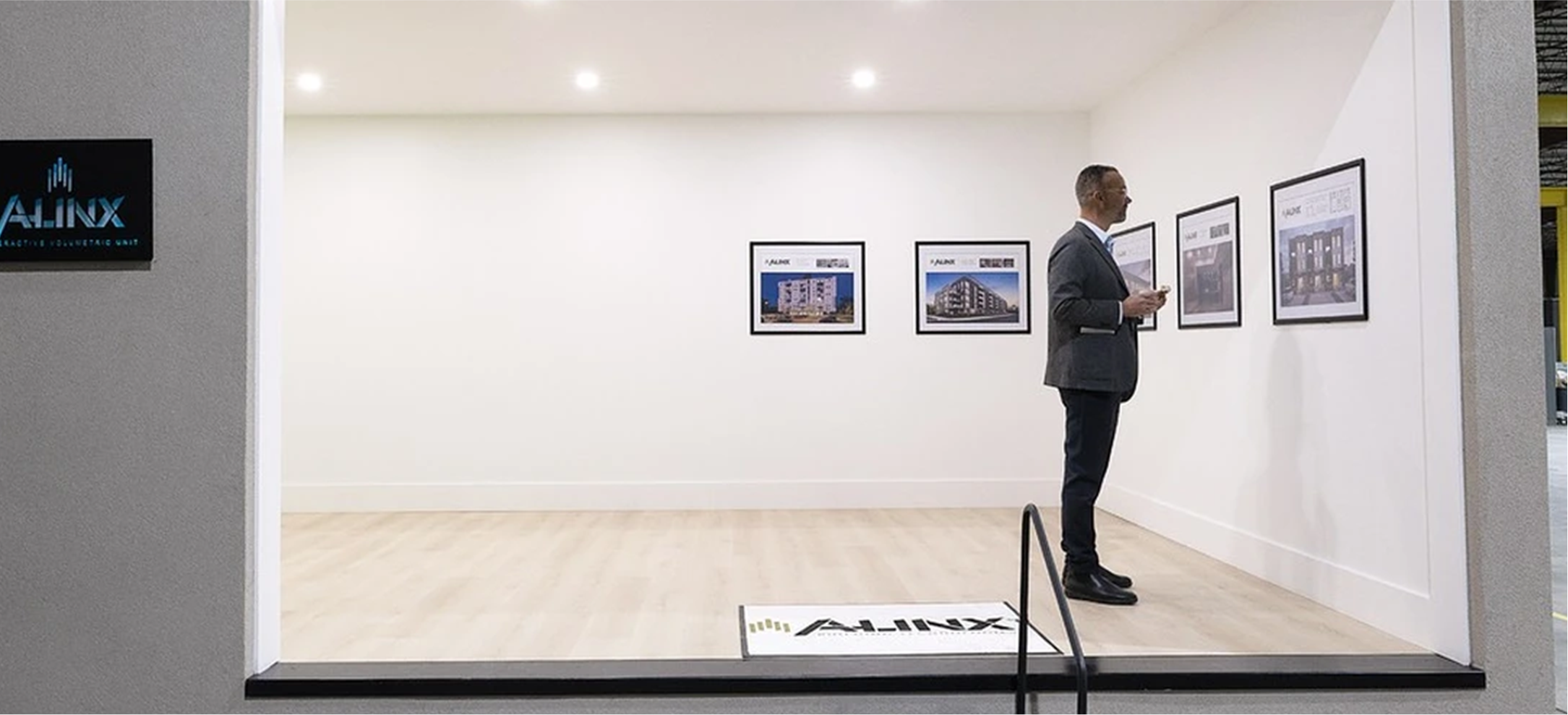
Traditional shovels were ditched at the launch of an innovative housing development in Windsor on Monday, with dignitaries instead wielding torque wrenches as the ceremonial tools.
“No shovels, no dirt,” said Justin Amicone, general manager of Amico Design Build and A-LINX, a local builder of finished modular units. And, despite the wintry weather outside, no snow at this formal groundbreaking.
A-LINX Building Technologies, with a 60,000-square-foot manufacturing facility on 8th Concession Road in Oldcastle, hosted Habitat for Humanity Windsor-Essex’s first “indoor groundbreaking,” with that organization showcasing its latest partnership with industry leaders aimed at making home ownership accessible to more local families.
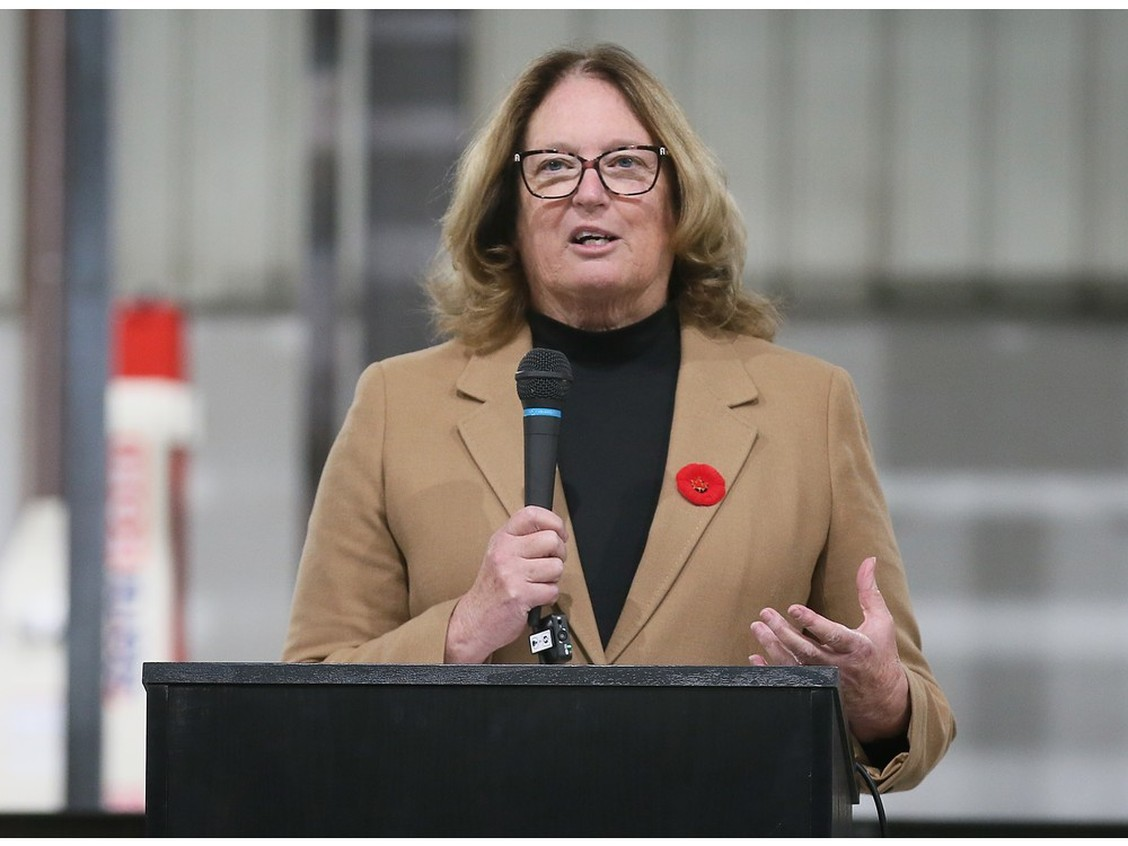
“Today marks a turning point,” said H4H Windsor-Essex CEO Fiona Coughlin. “Modular construction allows us to deliver homes faster, with high quality and greater predictability, which is exactly what this housing moment requires.”
After receiving national attention in 2022 by partnering with the University of Windsor to build a multi-unit building in Leamington using 3D-printed construction techniques, Coughlin’s organization is now on track to do the same with metal-framed, factory-built modular homes.
Partnering in Windsor-Essex with A-LINX is “writing the playbook on how to make housing affordable,” Habitat for Humanity national president and CEO Pedro Barata said Monday. The housing affordability crisis has become so acute, he said, that “a majority of Canadians are now sacrificing basics, like food,” in order to keep a roof over their heads.
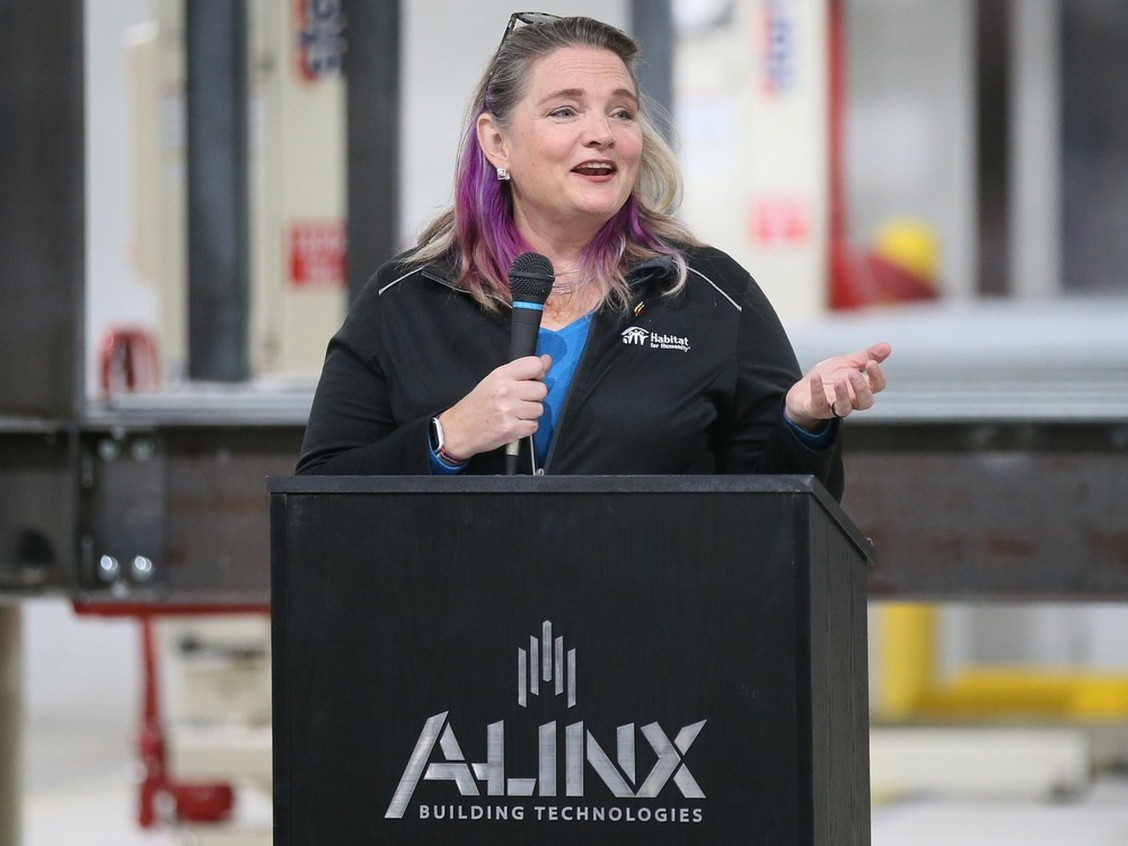
“Our mission is simple — build better homes and build faster,” said Justin Amicone, general manager of Amico Design Build and its affiliated division, A-LINX. And the goal, he added, is “so housing can be made attainable for all.”
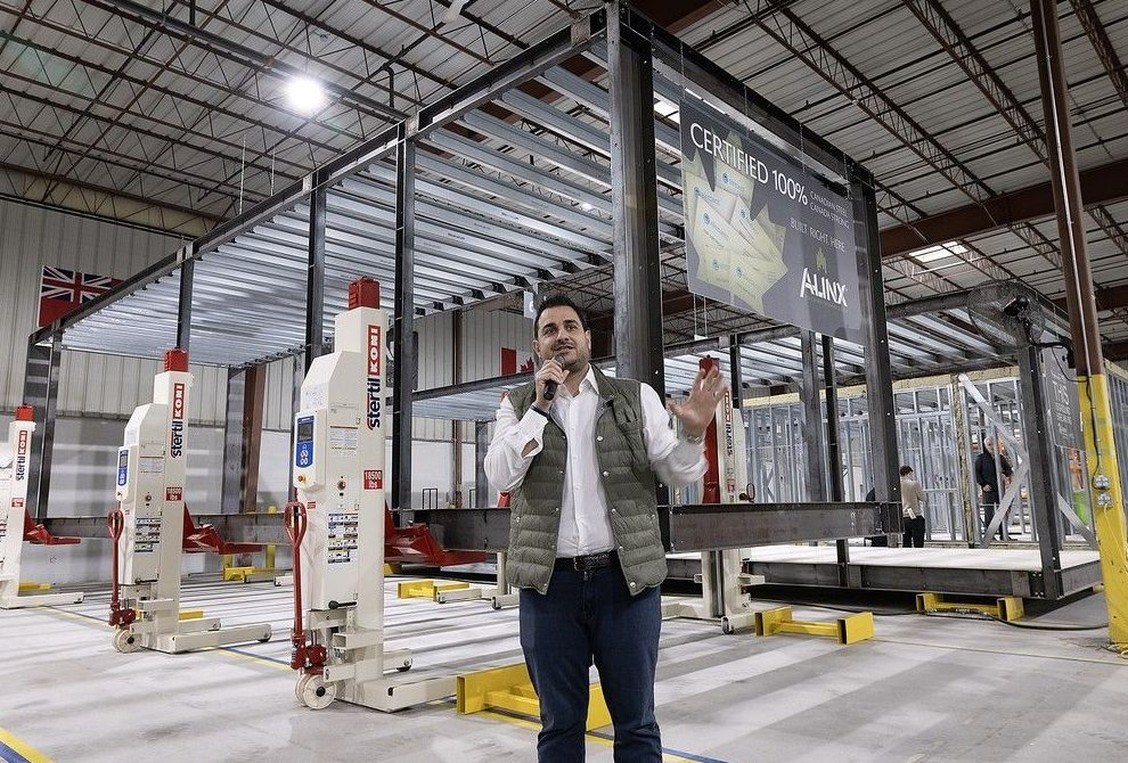
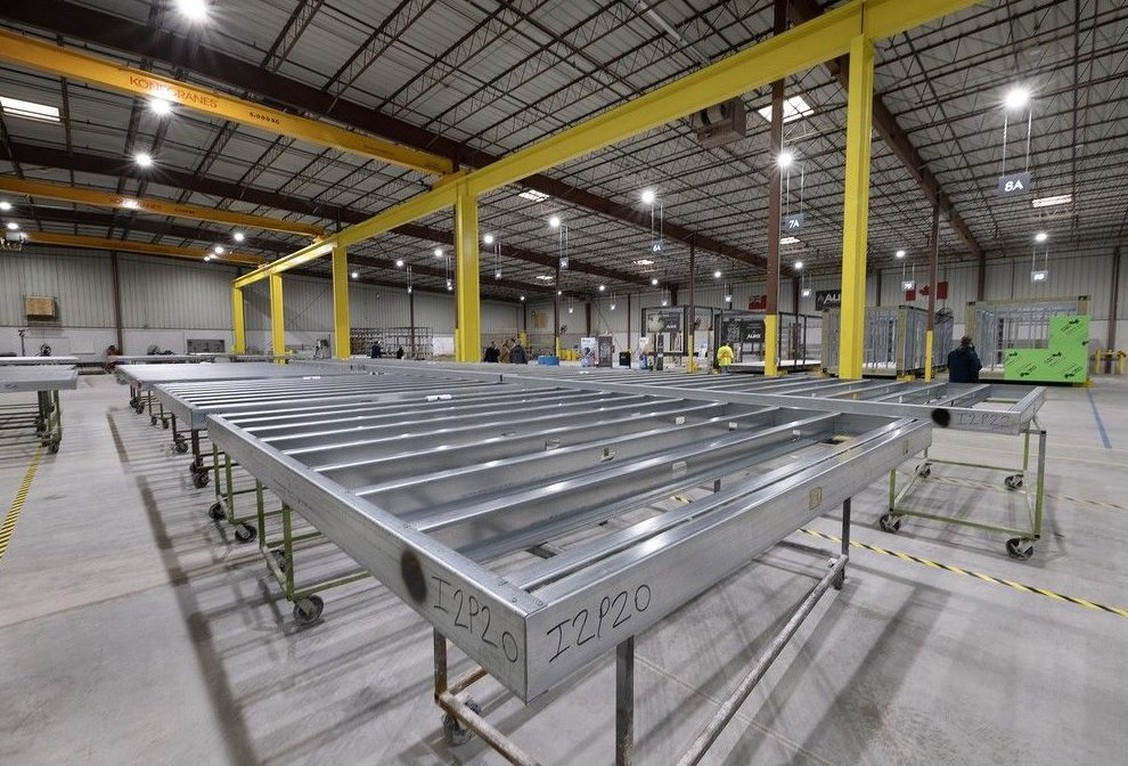
Habitat for Humanity gave details Monday on its next big project, a 16-unit townhouse development in Amherstburg. Unlike its more than 150 previous local builds — which would see volunteers and prospective owners wield hammers alongside on-site skilled-trade professionals — the Amherstburg build will see those units completed entirely indoors and then, according to Amicone, trucked over and “dropped on the foundation.”
Coughlin said her local group has set a fundraising goal of a million dollars to help finance the project, and she announced the first $200,000 donation from developers Anthony and Dino Maggio on behalf of their family. Construction is expected sometime in 2026.
“What starts as 16 homes in Amherstburg can become thousands across Canada,” said Coughlin, who cited a current local waitlist of more than 9,000 families “without safe, affordable homes.”
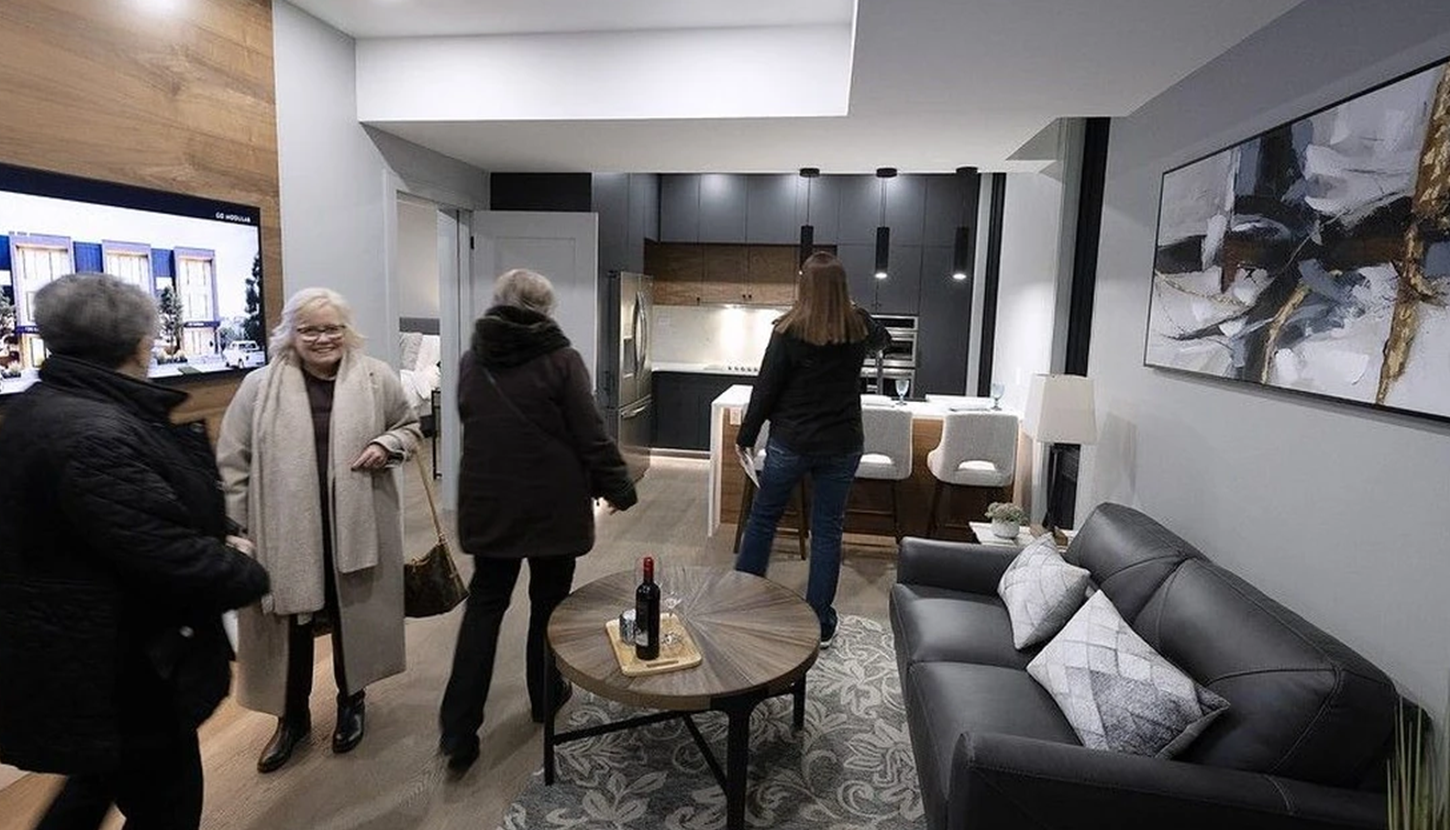
Amico Properties Inc. and Habitat for Humanity were partners in an ambitious multimillion-dollar project with the Town of Leamington to turn the former Leamington high school into an “attainable housing” community. That project was scrapped earlier this year after the parties couldn’t come up with the economics to make it work.
“Habitat and Amico really felt badly about the failure of the Leamington project,” Cindy Prince, Amico Properties Inc. vice-president of development, told the Star. Monday’s A-LINX event is part of their response.
With an ever-deepening housing affordability crisis across Canada, and developers and builders saying the private sector alone cannot solve it, last week’s federal Liberal budget saw multiple billions of dollars committed to tackle the problem.
Both Habitat for Humanity and A-LINX representatives told the Star they are actively pursuing some of that funding. Home ownership is becoming “further and further away from reality,” said Habitat’s Barata: “Young people don’t want that dream to die, and neither do we.”
Prince told the Star Amico and A-LINX would “absolutely” seek to partner with the City of Windsor, which has been freeing up publicly owned municipal lands for developer proposals to add to much-needed local housing stock.
Amicone said A-LINX’s steel framing is cost comparable to traditional wood construction, lasts much longer and is completely recyclable. Guests on Monday applauded when told A-LINX uses made-in-Canada steel. Amicone said indoor modular construction can be done year-round (no bad-weather or winter downtime), and done faster and with greater efficiency and less waste. With a catalogue of ready models, he told the Star A-LINX can “drastically reduce the cost of design.”
Asked about cost for consumers, Amicone told the Star that a trimmed-down new starter home, like the ones Habitat for Humanity is planning to build for first-time homeowners, could be offered to the consumer for about $350 per square foot, which is much less than going market rates for housing.
“We can absolutely make that dream come true,” Amicone said.
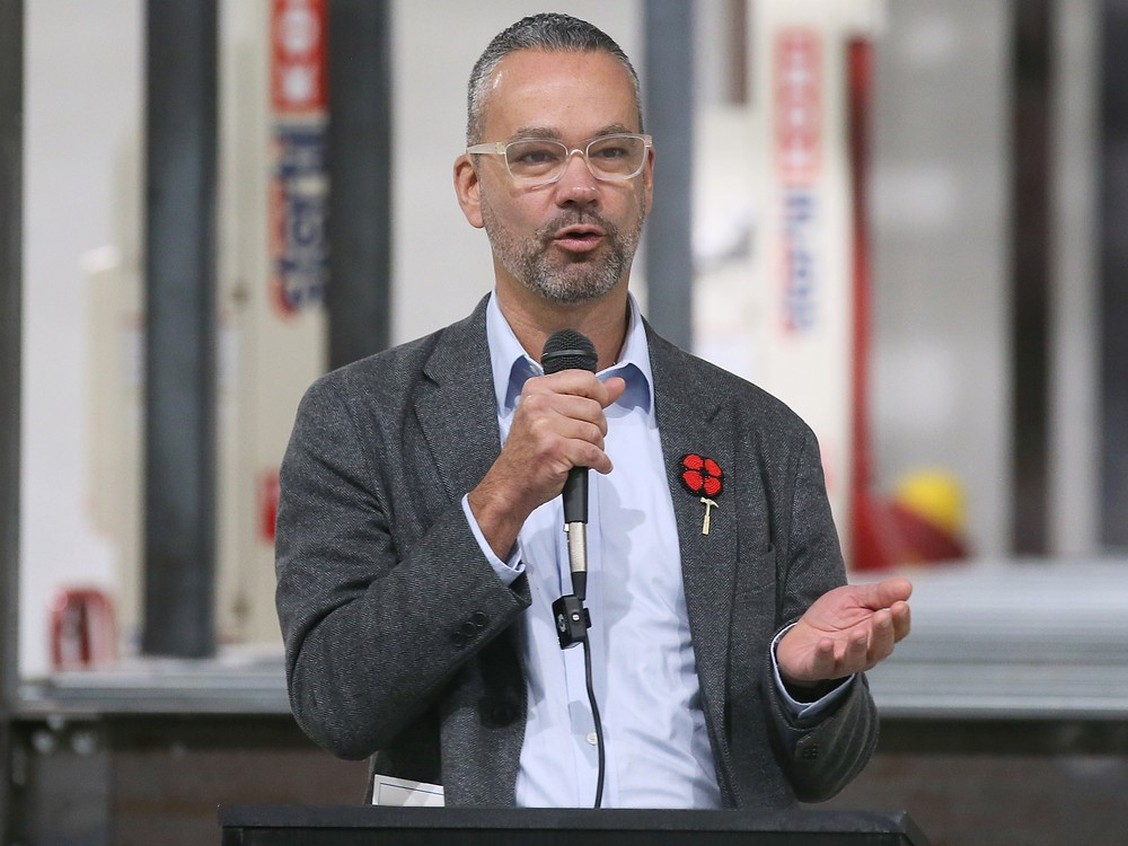
“None of us can do this alone,” Coughlin told the Star on the need for such partnerships between non-profits, the private sector and governments. She described the project announced Monday as a “scalable, efficient and community-focused solution” to help address Canada’s housing crisis, and to do that with the potential of expanding and diversifying the Windsor-Essex manufacturing sector to generate new jobs.
“This is a very exciting day,” Prince said Monday.
A-LINX, which was involved in construction of The Hive boutique condo building on Pelissier in downtown Windsor, manufactures fully finished modular units that can be configured as single homes, duplexes, fourplexes or multi-unit, multi-story buildings.
“This is the future of housing innovation,” said Habitat’s Barata: “Building hope, building ambition.”
